AEJMC Network

Networking Home for Divisions and Interest Groups

Shared web space for AEJMC DIGs

  • Home
  • Membership
    • Members Sites
    • FAQs
    • Contact Us
  • WordPress
    • An overview
    • Terms of use
    • User privilege levels
      • Administrator policy
      • Administrator agreement
    • WordPress security
    • Lost password
    • WordPress themes
      • Maintaining appearances
    • WordPress plugins
    • Posting video
    • WordPress news & facts

Archives for January 2021

AEJMC Mourns the Loss of a Beloved Former Staff Member

January 22, 2021 by Kyshia

January 22, 2021


It is with great sadness that we mourn the loss of our friend and colleague Fred Williams, the heartbeat of the AEJMC conference for 31 years.

We each have our own unique Fred story, but we are all better for knowing him. He will be greatly remembered and beyond missed.


— The AEJMC Staff
Read the full obituary

Filed Under: Uncategorized

A Special Message for Our Members

January 21, 2021 by Kyshia

March 21, 2021

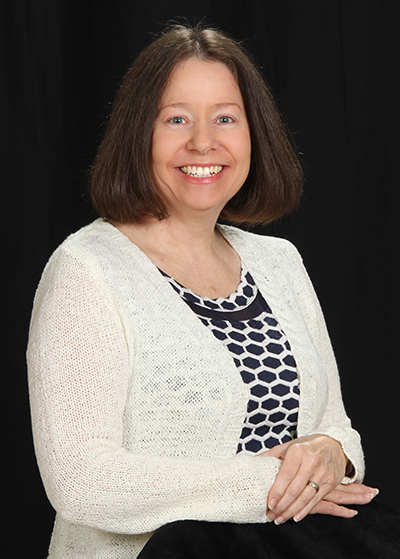
Dear AEJMC & ASJMC Community,

I have decided to begin enjoying my retirement a little earlier than previously planned.

I will transition from Executive Director to a support role on March 16, to begin retirement on April 1.
 
I have thoroughly enjoyed my time with AEJMC/ASJMC and this community, but it is now time for me to embrace the next chapter of my life. 
 
I leave the organization and you, its members, in the most capable hands.

Sincerely, 
Jennifer McGill
***************************************

Next Steps from your AEJMC/ASJMC Leadership:

Amanda Caldwell, the current Conference Manager, has been named by leadership as Interim Executive Director effective March 16. You may contact her anytime: amanda@aejmc.org.

Felicia Brown will continue to serve as the Assistant Director, among her other roles including Desktop Publisher and Council of Divisions Liaison. You may contact her anytime: felicia@aejmc.org.

The AEJMC/ASJMC Executive Director search launched in early February and applications are now under consideration.

The Associations have always benefitted from staff longevity and their leadership and staff are committed to a smooth transition. We remain here to continue to serve our members and the AEJMC/ASJMC Community.

Sincerely,
AEJMC/ASJMC Leadership

AEJMC Board of Directors:
http://www.aejmc.com/home/about/officers/board-of-directors/

ASJMC Executive Board:
http://www.asjmc.org/about/committees/executive.php

AEJMC/ASJMC Staff:
http://www.aejmc.com/home/about/office-team/

***************************************


January 21, 2021

Dear AEJMC/ASJMC members,

I wanted to share that I am retiring as AEJMC/ASJMC executive director on
September 30, 2021.

I first came to AEJMC/ASJMC in 1983 for one year before taking a leave for my
first child.  I returned to the associations in 1985 as an assistant and
then as executive director.

It has been amazing to see AEJMC/ASJMC grow through the years, and I know the
associations will continue to provide a place for members to learn, move
forward and become leaders in the years to come.

I want to thank all the members and officers for their support through
the years and for their work and dedication to make AEJMC/ASJMC successful.

I also want to thank the AEJMC/ASJMC staff through the years who have been
amazing to work with.  I commend their “outside the box” thinking which
has helped AEJMC/ASJMC react quickly to new ideas and the willingness to work
together for the success of the organizations.  It has truly been a great
team effort.

I am looking forward to travel, and, just maybe, I’ll write a book one of these
years.

Warm Regards,

Jennifer H. McGill

Jennifer McGill

Filed Under: Uncategorized

Tips from the AEJMC Teaching Committee

January 4, 2021 by Kyshia

Being a Crash Test Dummy for My Students

By William C. Singleton III
AEJMC Standing Committee
on Teaching
University of Alabama
wsingleton@crimson.ua.edu


(Article courtesy of AEJMC News, January 2021 issue)

My fellow Ph.D. graduate teaching assistants (GTAs) and even

some of my professors tell me I shouldn’t.

“That’s not wise.”

“You’re inviting trouble.”

“Keep your distance.”

“I wouldn’t do that.”

In many academic publications that offer tips for teaching professionals, it’s not advised.

That I don’t have my own office with a university phone doesn’t help matters. This plus the fact I want my students to understand they’re going into a career in which they must professionally bother people.

So, at the beginning of each semester, I give my students my cell phone number and tell them if they have any questions about a story assignment, AP Style tests or anything pertaining to the class, they can call or text me at any time. Of course, I admonish them to be wise about when to call (“At 1 a.m., you’re likely to be greeted with sleep babble.”), but I don’t want them to be shy about asking questions if they don’t know the answers – a fundamental curiosity they’ll need to succeed as reporters.

Then, I provide the reason I’m entertaining their inquiries and opening myself up to be bombarded by calls and texts throughout the semester: if you’re scared to ask questions of your sources and the questions you didn’t ask manifest as holes in your story, a meticulous but ornery editor is likely to demand you call your sources back and get answers to the questions you should have asked the first time.

And your cranky editor likely won’t care if you have to arouse them from a sound sleep – the type that results in incoherent rambling. “Trust me, I’ve been the one who’s had to make that call,” I say. “So I’m your crash test dummy. Start practicing this skill with me.”

Surprisingly, of the five classes I’ve taught, no student has ever called me, and only a few have texted me. I don’t know whether this has to do with “fear of the instructor” or if students are less inquiring than in previous generations, but it is somewhat disappointing, particularly the aspect of not wanting to talk through questions. I’ve noticed that more students prefer to email questions, but even those students represent a small percentage of the 30 to 40 aspiring journalists I teach per class, per semester.

I guess my naivete will wear off one day when my approach backfires and my cell number becomes a part of some elaborate prank or when I receive a full‐time professorship with my very own university phone. Until that day, I walk the path of the graduate teaching assistant, experimenting and learning as I go.

This idea of being the crash test dummy may be unappealing to those with or working on their Ph.D.’s. Obtaining a degree at the highest level of academia entitles one to the professional respect and courtesy that accompanies his and her endeavor. But, in a general sense, being the crash test dummy means providing experiences in class that will ready students for the real world of journalism. Even our mistakes – and theirs – can be great teaching tools to introduce students to real‐world scenarios and experiences that can help them avoid later pitfalls. And I don’t mind playing the role of the crash test dummy to sharpen their fledgling journalistic skills before they get on the road of life and career.

Among my approaches is that I inform students that they can challenge me on grades as they relate to their story assignments. I tell them if I kill one of your story ideas or you think your story deserved a better grade, you can make your appeal. I’m going to defend my position and explain why I gave you your grade, I say. But I want you to learn to stand up for your work because that’s what you’ll need to do when you pursue stories as journalists. And your news editor won’t always see eye‐to‐eye with you on a story idea. I rarely have students take me up on this challenge.

But one young woman did. I could tell she was nervous because she was trembling as she explained why she should receive a better grade on her story. And I gave her a better grade simply for stepping out of her comfort zone. I felt it was just as important to journalism education for her to learn to approach people she may not want to confront as it is to understand subject‐verb agreement.

Also, because I’ve spent much of my journalism and public relations career in Birmingham, I’ve developed a number of professional contacts I call upon when I need guest speakers for my class. I enjoy supplementing my teaching with media professionals because it reinforces points I’ve made in class and because it gives my students an opportunity to pick the brains of someone currently working in the business, and, more important, gives them the opportunity to make a professional contact. During one visit, a media professional asked for a volunteer to help him role‐play an interview. None of my students responded. I later told them that was a golden opportunity for them to stand out and make a professional contact. Sometimes I wonder if I’m like Charlie Brown’s teacher speaking unintelligibly to my students. Then, I receive an encouraging correspondence that makes it all worthwhile – a thank you email from a student who took me up on my offer, reached out to one of my guests, maintained contact and now has an internship at his television station. (#mesmiling)

As the commercial goes, you CAN learn a lot from a dummy.

<Teaching Corner

Filed Under: Teaching Tips

AEJMC Network

"AEJMC Network" is the name given to the server space shared by official bodies of the Association for Education in Journalism and Mass Communication.

Search

RSS AEJMC Job Postings

Genesis Theme Support by WebPresence · Copyright © 2026 AEJMC · Log in