LATEST STATEMENT:
May 18, 2020
Dear AEJMC Colleagues:
We hope you, your families, and your friends and associates are staying safe and healthy amid the COVID-19 pandemic and accompanying dislocations. This is certainly a year when the terms “extraordinary” and “unprecedented,” when applied to almost everything in academia, including national conferences, seem like understatements.
I write to share key updates and details about the AEJMC 2020 virtual conference August 6–9 and pre-conference events on August 5. (You will find additional information on the conference FAQ page.)
The 2020 conference, although different in format from any previous AEJMC event, promises exciting prospects both familiar and innovative. If you are presenting a paper or poster or serving on a panel, you will still interact. We have a compelling keynote panel headlining the conference theme of “Saving the Planet through Better Media and Communication” and featuring viewings of and discussion about the stunning documentary on modern science communication, Science Friction. Our Cornerstone Session is particularly relevant, addressing the topic of teaching during the pandemic. Overall, we will offer opportunities for intellectual stimulation, social engagement, exchange of teaching and research ideas, and career development that you’ve always counted on in early August.
Registration for AEJMC 2020 opens May 22. We have reduced registration rates to benefit our attendees. “Early bird” rates, valid until July 9, have been reduced by $50 for regular members and lowered by $40 for student and retired members. Click here to view registration rates.
We expect the costs for the virtual conference to total $273,000. We have projected that about 1,070 people will register for the conference. So, to meet the costs of the conference, we need to charge an average of $255 per registrant in registration fees – which also allows a margin for extra, unanticipated costs. You may view the original conference budget for the in-person event here and the new approved budget for the virtual conference here.
Conference costs currently include $90,000 paid to vFairs, which will operate the conference virtual site; costs for the All-Academic submission and review software; costs of building the conference website; the registration portal; bank charges; and the cost of the printing of the conference program, which will be mailed to you. Conference expenses also include some items AEJMC has already paid for like Guidebook (app), and professional headshots, which will both be set up for the 2021 conference.
The decisions leading to setting these rates have not been easy.
Part of our charge as a board and staff is to ensure the fiscal health of our organization for now and the future. In previous years, the conference provided income for the AEJMC budget. However, faced with the challenges for academics during the COVID-19 pandemic, the reduced registration rates for AEJMC 2020 will allow us only to break even. Nevertheless, we will continue to subsidize member assistance programs, such as free registration for up to three top-paper-winner graduate students per division. As many as 75 graduate students will benefit.
We believe that AEJMC 2020 will bring together an engaging array of sessions on current developments, research, teaching, professional freedom and responsibility, and jobs and career mentoring in a format that, by default, will be live, synchronous, and recorded. (So, for the first time, you won’t have to worry about missing a session you want to see because you’re presenting at another session!) We also will host social events for you to network and connect with colleagues. We want your experience to be as “normal” as possible through the new modality while at the same time providing new features.
Besides this overview, I want to offer some personal context and perspectives, based on my involvement with AEJMC as a graduate student starting in the 1990s through my participation on the Research and Finance Committees, and now as president and a member of the Board of Directors.
First, AEJMC is a remarkably democratic organization. Elected officials, or those appointed by them, make most decisions. The AEJMC staff advises and executes, but the final responsibility for direction rests with the leadership you elect. The AEJMC Board of Directors works with its various constituencies and represents them well. Over the past months, every one of our discussions has been a robust exchange with dissenting ideas, but eventually resulting in near-unanimous votes for action.
Second, due to my almost 20 years of writing for The Chronicle of Higher Education and my general interest in how academia works, I have had the opportunity to compare and contrast AEJMC with many other professional associations. I have concluded that we run a lean operation. We have a small staff with many responsibilities that operates in an efficient manner on a small budget. The organization doesn’t strive for “big profits,” nor does it carry a weighty bureaucratic apparatus. We commend the AEJMC staff for accomplishing the miracle of successful conferences, year after year, in addition to all the other services they provide. It is a tribute to their work ethic, integrity, and commitment to cause.
Third, we are heartened to learn from the positive experience of the virtual format of the AEJMC Southeast Colloquium 2020 in March. We have adopted best practices from peer groups such as the American Academy of Advertising (AAA), which ran its San Diego conference in March virtually as well. We also intend to study the plans and/or actions of the International Communication Association (ICA), Broadcast Education Association (BEA), National Association of Black Journalists (NABJ), National Communication Association (NCA), and other peer organizations. We urge you to share your experiences or knowledge with us and each other as you design your individual or group sessions.
Indeed, I think AEJMC 2020 will be a learning experience for all of us. AEJMC was founded in 1912 and has evolved into a global association of 3,700 members from 50 nations. AEJMC has weathered trials and tribulations in our rich history of 108 years. There will be other crises, global and local, in future years. We can now appreciate and script how to get things right and impart our insights to our successors—which, after all, is what education is all about.
In sum, I hope the conference planning and the event itself will be an exemplar of how disparate individuals and interests can sustain a common goal: the continued success of AEJMC and impact on all members. Each session will succeed through the talents and cooperation of the people involved. We rely on your ideas, ingenuity, and compassion. Thank you for supporting and contributing to our scholarly and professional community. AEJMC has thrived and will continue to thrive because of you.
See you at AEJMC 2020 in August!
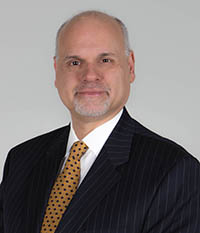 David D. Perlmutter, Ph.D.
2019-2020
President, Association for Education in Journalism and Mass Communication
April 30, 2020
Dear AEJMC Members,
I hope this note finds you, your families, and your colleagues healthy and accomplishing your professional goals.
I write to report that in light of the health, travel safety, access, and funding concerns affecting you, our members, the AEJMC Board has voted unanimously to “go virtual” for our 2020 conference (retaining the same August 6-9 dates and related pre-conference events on August 5). We feel this is the safest and best decision for our attendees, their families, and staff. As many of you realize, we have been in talks since mid-February with our board of directors, staff, members, and the hotel with which we are contracted to explore all potential options for the 2020 conference. AEJMC just this week completed negotiations with the San Francisco hotel to move our 2020 contract to 2025 with no penalty. (Cancelling the contract sooner would have incurred for the association an almost $700,000 penalty.) We also feel we have learned much from our discussions with and observations of other professional associations that have offered or are about to offer virtual conferences.
Our intention is to provide our AEJMC community with a rich, valuable, and engaging experience.
We look forward to sending you a more detailed update on the AEJMC 2020 Virtual Conference within the next three weeks.
So thank you for your patience and support. There were 1,617 total submissions (1,166 full papers and 451 extended abstracts) to the All-Academic site for the 2020 competition. This is higher than the last two conferences.
See you at AEJMC 2020 in August!
Note: What if you have already booked a hotel room?
Don’t worry – you may cancel:
MARRIOTT MARQUIS CANCEL POLICY
You must call 72 hours prior to the day of your arrival to cancel your room reservation to avoid a one-night room and tax penalty. This information should be included in your reservation confirmation also.
888-236-2427 or 888-575-8934
Thank you for being a member of the AEJMC Community!
David D. Perlmutter, Ph.D.
2019-2020
President, Association for Education in Journalism and Mass Communication
March 27, 2020
Dear AEJMC Colleagues,
AEJMC will have a 2020 conference! The questions the Board will resolve are: What does it look like and when and where it will be? Currently, we are looking at many options and also talking to our peers in other organizations who have gone through or are facing some of the same choices we need to make. We have found that engagement to be extremely fruitful. The staff are also working hard to make sure that we are fully informed about all costs, trade-offs, and details. With all this in mind, our intention is to make a final decision around the first week of May. We cannot make a final decision at this time, because the penalty amount (right now) would be cost prohibitive to the organization. That said, again, the AEJMC Conference 2020 will occur! Conference details may be found on the conference website: http://aejmc.org/events/sanfrancisco20/.
David D. Perlmutter, Ph.D.
2019-2020
President, Association for Education in Journalism and Mass Communication
March 9, 2020
Dear AEJMC Colleagues,
We wanted to let you know that we are proceeding as normal for planning the AEJMC 2020 Academic Conference in San Francisco.
We have not received any information that would lead us to alter our planning or programming besides the obvious recommended safety and security measures.
We will issue further updates if there are any changes.
David D. Perlmutter, Ph.D.
2019-2020
President, Association for Education in Journalism and Mass Communication
 By Emily T. Metzgar